Thursday, November 10, 2011
FED Balance Sheet and M2 and Debt
First a look at the FED BS. Here we have a slow decrease from peak. Hopefully this will be a trend. Yet as Ron Paul notes the forced low interest rates frankly mean those elderly on fixed incomes are the ones being taxed by the large banks to help support their income. It is frankly a total disregard of those who were wise and saved. They now have 0% interest and thus must deplete their capital. A true free market rate would be more likely 4.5-5.5%. That would adjust all elements to reasonable levels. It would drive up US Government Debt costs as well. Thus we have a collusion of the FED and the current Administration living off the backs of the retired and furthermore now hitting their Medicare to the tune of $500B.
The FED's collection of US Treasuries has declined somewhat, a good trend, but one suspects a temporary one. It is a result of everyone else being worse. Thus a market for US Treasuries.
US Debt continues unabated. It well exceeds GDP and there appears to be no limit.
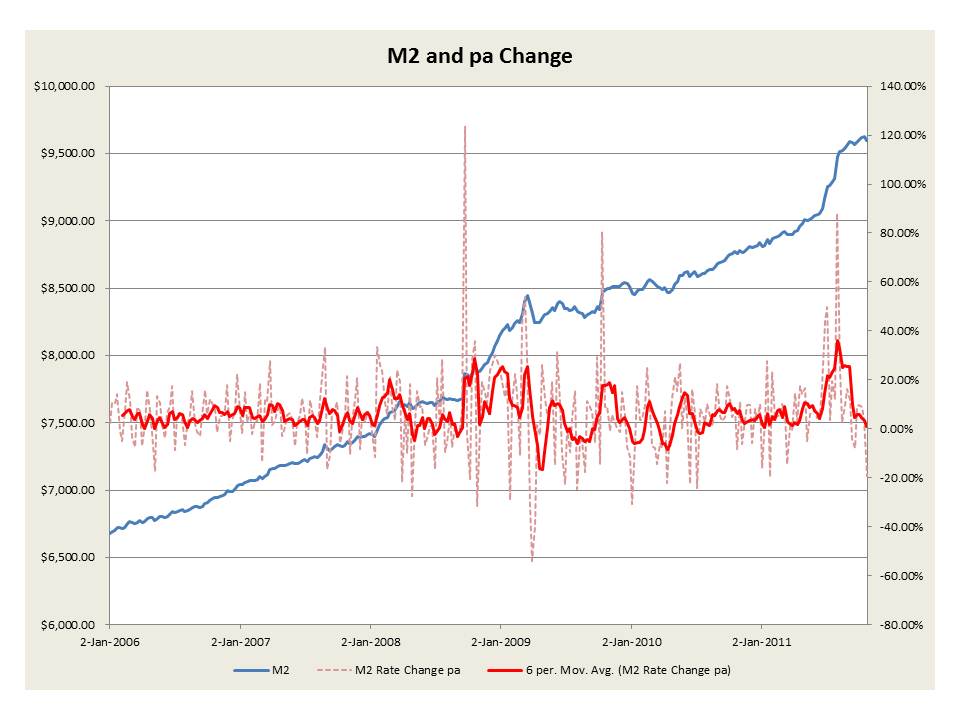
Finally I look at M2 from time to time and there has been volatility but now we see a flattening. Clearly the volatility will still be there but M2 shows a good 4-5% inflation, missing in the FEDs artificial control.
It is a shame that the old folks do not understand what is being done to them. The children will be loaded with long term debt unless we become Argentina and the older folks will just eat away principal. This is truly a third world governing milieu.
Labels:
Economy
Well This Should Be Interesting
The Harvard Crimson has been following the occupation of Harvard Yard by the OWS contingent in Cambridge. As they state:
Now as one who lived through the 60s and tear gas in the Square this is a bit disorganized and in my opinion demonstrates the collapse of our educational system. As one student is quoted as saying:
Really, do they teach any real history at Harvard these days. Children of the Baby Boomers Revenge perhaps. Social uprising, at what? Yes perhaps Harvard had something to do with it, after all it was their economic types who both set up this mess and then made it worse, but they started at MIT. I can't wait till this migrates down Mass Ave.
I remember one night working late I believe in 69' in the old Building 20, the Rad Lab's wooden shacks, and we got a bomb scare since the SDS, I believe from Harvard, wanted to bomb the ROTC. Did any of us leave, no, did any of us join in, no, we just kept working, someone had to pay for all of this, thus we kept working to keep the economic engine working.
Also the students should note that at their head appears to be some "Dean of Student Life", one of the more than likely dozens if not hundreds of Deans of something or other. That and their staff drive up costs.
Now back to the student quote. What is the issue, what is your proposal, what are the anticipated results, how will you communicate than, how will you propose to implement it? Duh!
Revolutionaries, namely those seeking a fundamental change in a system, often have well thought out plans, for better or worse. "No Taxation without representation!", simple, not the abolition of taxes, it was understood that they played a necessary function, but let us have a say. Even Robespierre had his views, the Revolution was for Equality, Liberty, and some form of Brotherhood, vague as they were, it opposed the monarchy. Then the Terror.
Even Lenin had a well thought out plan. He wanted a communist state and the elimination of the Czar, and communist aka Marx and his tomes.
But what do these people want? Where is their Rousseau, Voltaire, Marx, Paine? Where is the Jefferson to write a precis, a list of complaints? It is not as if there was not enough history, West and East, to show how to make a movement like this function.
Then one must ask, who created and leads this? All too often students are followers, and they often are the ones to complain. Be a leader, that is how one gets to the 1%. Followers are doomed to the 99%.
A tent city was hastily constructed in front of University Hall
Wednesday night during a tense dialogue between “Occupy Harvard”
protesters and Dean of Student Life Suzy M. Nelson.
The occupation
followed a protest on campus involving more than roughly 350
participants sympathetic to the Occupy movement, during which Harvard
Yard was shut down by Harvard University Police officers and Securitas
guards.
The protest was intended to convey disapproval of the
University’s perceived complicity in growing income inequality across
the country. Participants included students, staff, faculty, and
community members.
Around 7 p.m., protesters were met with
increased security that would prevent Boston residents who were not
Harvard affiliates from entering the Yard.
Now as one who lived through the 60s and tear gas in the Square this is a bit disorganized and in my opinion demonstrates the collapse of our educational system. As one student is quoted as saying:
“I’m here because I think this is one of the most important social
uprisings in modern American history,” ..... said. “I believe deeply
that this is a moment in America’s history that requires such a people’s
movement. I’m happy to be part of it.”
Really, do they teach any real history at Harvard these days. Children of the Baby Boomers Revenge perhaps. Social uprising, at what? Yes perhaps Harvard had something to do with it, after all it was their economic types who both set up this mess and then made it worse, but they started at MIT. I can't wait till this migrates down Mass Ave.
I remember one night working late I believe in 69' in the old Building 20, the Rad Lab's wooden shacks, and we got a bomb scare since the SDS, I believe from Harvard, wanted to bomb the ROTC. Did any of us leave, no, did any of us join in, no, we just kept working, someone had to pay for all of this, thus we kept working to keep the economic engine working.
Also the students should note that at their head appears to be some "Dean of Student Life", one of the more than likely dozens if not hundreds of Deans of something or other. That and their staff drive up costs.
Now back to the student quote. What is the issue, what is your proposal, what are the anticipated results, how will you communicate than, how will you propose to implement it? Duh!
Revolutionaries, namely those seeking a fundamental change in a system, often have well thought out plans, for better or worse. "No Taxation without representation!", simple, not the abolition of taxes, it was understood that they played a necessary function, but let us have a say. Even Robespierre had his views, the Revolution was for Equality, Liberty, and some form of Brotherhood, vague as they were, it opposed the monarchy. Then the Terror.
Even Lenin had a well thought out plan. He wanted a communist state and the elimination of the Czar, and communist aka Marx and his tomes.
But what do these people want? Where is their Rousseau, Voltaire, Marx, Paine? Where is the Jefferson to write a precis, a list of complaints? It is not as if there was not enough history, West and East, to show how to make a movement like this function.
Then one must ask, who created and leads this? All too often students are followers, and they often are the ones to complain. Be a leader, that is how one gets to the 1%. Followers are doomed to the 99%.
Labels:
Academy
Wednesday, November 9, 2011
You Really Cannot Make This Up!
The USDA and the current Administration were ready to deliver the Christmas Tree Tax, says The Hill.
They state:
Now how dumb does one have to become. Yes it is a $0.15 tax per tree but the cost to collect those taxes will be monumental. Forms, forms and more forms. This is the USDA for God's sake, do you have any clue how many forms they have, I do since I had gone through the USDA loan process, and then walked. If you do not fill in the forms you are out of business.
Now the people in DC want to put the Boy Scouts out of business, I knew they hated the Scouts but this is a bit too much.
Where is Robespierre when we really need him?
They state:
The Obama administration is delaying implementation of a new Christmas tree tax that has provoked conservative fury.
A
White House spokesman said the U.S. Department of Agriculture would
revisit the issue after several Republican lawmakers criticized the
proposed 15-cent-per-tree tax, which would have been paid by producers
and importers of Christmas trees.
The White House also pushed back at the idea it was proposing a Christmas tree tax.
Now how dumb does one have to become. Yes it is a $0.15 tax per tree but the cost to collect those taxes will be monumental. Forms, forms and more forms. This is the USDA for God's sake, do you have any clue how many forms they have, I do since I had gone through the USDA loan process, and then walked. If you do not fill in the forms you are out of business.
Now the people in DC want to put the Boy Scouts out of business, I knew they hated the Scouts but this is a bit too much.
Where is Robespierre when we really need him?
Labels:
Politics
Tuesday, November 8, 2011
Some Thoughts from Hayek
In the biography by Ebensten of Hayek the authors makes several prescient comments. I would like to share a few here:
On Individualism:
And the second on Federal Debt:
Hayek saw the element of individualism along with the extravagance of debt as two key factors in the evolution of the United States. First preserving individualism in the sense of the Scottish Enlightenment and second tamping down the stupidity of explosive debt.
First the lack of a designing and directing mind is the lack of a Government in central control. Just look at what has been happening when that is tried.
Second, one wonders what Hayek would say of the explosive debt we now see. Yes, he thought highly of Keynes but:
the most impressive intellectual figure I have ever encountered and whose general intellectual superiority I have readily acknowledged was wholly wrong in the scientific work for which he is chiefly known
Seems to say it all.
On Individualism:
He distinguished two types of individualism: true—stemming from England and Scotland, emphasizing the insignificance of individual reason; and false—having roots in Cartesian rationalism—stressing the
importance of individual reason. Of true individualism, the "first thing
that should be said," Hayek stated, "is that it is primarily a theory of society, an attempt to
understand the forces which determine the social life of man, and only in the second instance a set of
political maxims derived from this view of society. Its basic contention is
that there is no other way of understanding social phenomena but through our
understanding of individual actions. . . . The
next step in the individualistic analysis of society
is the contention that by tracing the combined effects of
individual actions, we discover that many of the institutions on which human
achievements rest have arisen and are functioning without
a designing and directing mind.
And the second on Federal Debt:
He was greatly concerned about
United States federal government budget deficits. In a letter to the Times,
he wrote "Sir, you would do a public
service if you displayed in capital letters the elementary truth that IF THE
UNITED STATES GOVERNMENT BORROWS A LARGE PART OF THE
WORLD'S SAVINGS TO FINANCE CURRENT EXPENDITURE, THE CAPITAL AVAILABLE ANYWHERE
FOR INVESTMENT MUST BECOME SCARCE AND EXPENSIVE."This
was not the first time he wrote to a newspaper recommending the use of capital
letters. In 1978, he wrote a letter-to-the-editor to the Wall
Street Journal, "Could you print in front of
every issue in headline letters the simple truth that INFLATION IS MADE BY
GOVERNMENT AND ITS AGENTS: NOBODY ELSE CAN DO ANYTHING ABOUT IT. It might do some good!" though he noted in his scrapbook that the letter was
published only once and in small print.
In 1983, Hayek was asked by the
news magazine the Economist to
participate in a centenary critique on Keynes. His final word on his old
Cambridge friend was contained in the June 11
edition. There he wrote that he was "claiming that perhaps the most
impressive intellectual figure I have ever encountered and whose general
intellectual superiority I have readily acknowledged
was wholly wrong in the scientific work for which he is
chiefly known." He
was a bit kinder in an earlier newspaper interview, when he responded to the
question, "Are there any similarities between your economic theory and
that of Keynes?" "No. I think basically Keynes was also a free trader and an economic liberal. But with many qualifications and
restrictions. He was never quite consistent. We were personal friends but we
rarely agreed on economics."
Hayek saw the element of individualism along with the extravagance of debt as two key factors in the evolution of the United States. First preserving individualism in the sense of the Scottish Enlightenment and second tamping down the stupidity of explosive debt.
First the lack of a designing and directing mind is the lack of a Government in central control. Just look at what has been happening when that is tried.
Second, one wonders what Hayek would say of the explosive debt we now see. Yes, he thought highly of Keynes but:
the most impressive intellectual figure I have ever encountered and whose general intellectual superiority I have readily acknowledged was wholly wrong in the scientific work for which he is chiefly known
Seems to say it all.
Monday, November 7, 2011
Why MIT?
Grafton at the NY Review of Books uses MIT as the intro to his analysis of the failure of US Universities. Why?
He states:
Frankly this does not play at all at MIT. Perhaps Princeton or Yale, but MIT? really. Why do we have so many from China, tuition free, and then they return because we fail to get them resident visas. They are creative, productive and not chose from alumni children, in fact the alumni offspring are limited at best.
MIT produces some of the best, if not often the best. One wonders who chose the photo for this article?
We have no short term PhDs, we have senior faculty teaching Freshman, more than one can say about many other institutions. Shame on the Review.
Perhaps he should investigate the alleged NYU student and puppet user who complains as noted in the piece which states:
When I entered MIT I did so by looking at the NY Times, 1959, and seeing what jobs were available. I really wanted "pure math" but frankly there were no jobs for pure mathematicians. Thank God MIT had EE, it was close enough to being an electrician just in case! And when I finished I had no debt!
He states:
Yet American universities also attract ferocious criticism, much of
it from professors and from journalists who know them well, and that’s
entirely reasonable too. Every coin has its other side, every virtue its
corresponding vice—and practically every university its festering
sores. At the most prestigious medical schools, professors publish the
work of paid flacks for pharmaceutical companies under their own names.
At many state universities and more than a few private ones, head
football and basketball coaches earn millions and their assistants
hundreds of thousands for running semiprofessional teams. Few of these
teams earn much money for the universities that sponsor them, and some
brutally exploit their players.
At competitive private colleges
and universities, admissions directors reserve places in each class for
the children of alumni and potential donors; for athletes, many of whom
will make less use of their academic opportunities than their classmates
do; and simply for those who can pay. And at universities that boast of
their commitment to undergraduate teaching, too many professors gabble
through PowerPoint slides twice a week and entrust the face-to-face
teaching of actual students to underpaid graduate students and Ph.D.s on
short-term contracts, who do their best to impart basic skills in
writing and quantitative analysis while earning only a few thousand
dollars a course.
Frankly this does not play at all at MIT. Perhaps Princeton or Yale, but MIT? really. Why do we have so many from China, tuition free, and then they return because we fail to get them resident visas. They are creative, productive and not chose from alumni children, in fact the alumni offspring are limited at best.
MIT produces some of the best, if not often the best. One wonders who chose the photo for this article?
We have no short term PhDs, we have senior faculty teaching Freshman, more than one can say about many other institutions. Shame on the Review.
Perhaps he should investigate the alleged NYU student and puppet user who complains as noted in the piece which states:
Here’s an astounding illustration of my argument that “American students are not studying the fields with the greatest economic potential.”
The Nation: A few years ago, Joe Therrien, a graduate of the NYC Teaching Fellows program, was working as a full-time drama teacher at a public elementary school in New York City. Frustrated by huge class sizes, sparse resources and a disorganized bureaucracy, he set off to the University of Connecticut to get an MFA in his passion—puppetry. Three years and $35,000 in student loans later, he emerged with degree in hand, and because puppeteers aren’t exactly in high demand…he’s working at his old school as a full-time “substitute”…[earning less than he did before].
…Like a lot of the young protesters who have flocked to Occupy Wall Street, Joe had thought that hard work and education would bring, if not class mobility, at least a measure of security…But the past decade of stagnant wages for the 99 percent and million-dollar bonuses for the 1 percent has awakened the kids of the middle class to a national nightmare: the dream that coaxed their parents to meet the demands of work, school, mortgage payments and tuition bills is shattered.
What astounds me is not that someone could amass $35,000 in student
loans pursuing a dream of puppetry, everyone has their dreams and I do
not fault Joe for his. What astounds me is that Richard Kim, the
executive editor of The Nation and the author of this article, thinks
that the failure of a puppeteer to find a job he loves is a good way to
illustrate the “national nightmare” of the job market. Even in a wealthy
society it’s a privilege to have the kind of job that Kim thinks are
the entitlement of the middle class. And, as Tyler says, we are not as
wealthy as we thought we were.
In considering the plight of the puppeteer lets also remember that
millions of the unemployed would be grateful to have a job that they
don’t like.
When I entered MIT I did so by looking at the NY Times, 1959, and seeing what jobs were available. I really wanted "pure math" but frankly there were no jobs for pure mathematicians. Thank God MIT had EE, it was close enough to being an electrician just in case! And when I finished I had no debt!
Labels:
Academy
Changing Unemployment
Again on the Mankiw blog is a comment regarding his discussion on employment and the understanding that technology has played a role.
Let me review four of my prior postings:
1. Wiener some sixty years ago in Cybernetics and The Human Use of Human Beings laid out just what is happening. It was no surprise then nor should it be now. Namely we have "machines" which make humans more productive and thus decrease the demand for human labor as relates to what a machine can do. Simply, I have not had a need for a secretary in over 20 some years. In fact they get in the way. I type, I electronically file, I email, I use my mobile phone, and thus why get some intermediary unless there is value added.
2. Economists have made one mistake after another, a la Romer. So frankly why do we need them. Unlike say physicians who can do more and are forced to do so, economists really do not accomplish anything, just churn up the water. Perhaps when that is fully recognized we can reduce that overhead.
3. We, not me but "academics", try to make learning science and engineering easier and more learner friendly. That is the core of what I call the "iPhone" generation, namely give someone an iPhone and let them play with it and we assume that they are technically astute. In fact they could never design such a device nor construct it. The poor student who found mechanics "too hard" was probably never really challenged. One can get 800 on the math part of the SATs but frankly that does not mean anything in terms of solving a mechanics problem, that requires understanding geometry and how to fit F=ma into that geometry, that is all, and you do NOT do that by memorizing.
4. Finally good schools are good "fishing, drinking, and smoking clubs", namely watering holes where smart people gather and learn from each other. The learning is what topics are hot, what techniques work, where things are going, and most importantly getting a feeling for one's own measure. Egos can be destroyed or built in such an environment and it the very ego which is a core to the success of the entrepreneur.
Thus growth requires an entrepreneur, one trained in the area of expertise, but one secure in their own vision of moving forward. It is the "individual" who makes progress.
As the contributor to the blog states:
We
attribute this in part to the fact that tech. progress is driving
productivity even has it leaves many types of workers behind. In fact, a
large group has been made worse off, even as those with education and
talent have gained immensely, and opportunities for entrepreneurs are
better than ever. In my judgment, the underlying trends are on track to
accelerating in coming years.
Technical progress has always been driving productivity, just think of the wheel, the steam engine and of course the PC. Education qua schooling is useless unless one is independently well off. I selected Engineering because there were jobs when I started, there were none ten years later, but welcome to the luck of the draw. But one makes do, not complain. The problem as I understand it is that there is a view of entitlement, entitlement of success, if one finishes some form of college, whether that is a productive path or not. That is not true. A History or Philosophy major may be well educated but the demand for that skill in the work force is nil.
No matter what Deans of Liberal Arts say. The Chinese students focus on that productivity factor, thus engineering. But also if one looks at the authors of the new biotech and genomics papers they come from the new Chinese generation, and if we think we have problems now just wait a decade! Frankly it is easy to be an engineer compared to the total uncertainty of the biotech world. Yet the challenge is being met by what we call our economic competitors.
Labels:
Economy
Subscribe to:
Posts (Atom)